
Idle parts.
Running lines.
One factory's surplus is another factory's missing part. Find it by part number, or list your idle stock straight from your ERP, an Excel file or a photo.

In stock, ready to order.
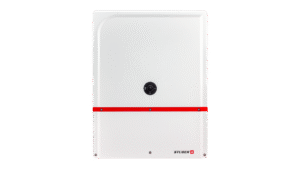 Studer
 – next1
From 5 249,67 € incl. VAT 25.5%From 4 183,00 € excl. VAT
 ZYC
ZYC – SIMPO HV BMS-Unit
898,58 € incl. VAT 25.5%716,00 € excl. VAT
 Studer
 – next3 rack
16 499,49 € incl. VAT 25.5%13 147,00 € excl. VAT
 Studer
 – next3
16 499,49 € incl. VAT 25.5%13 147,00 € excl. VAT
 Malmbergs
 – Motor protection switch 23.0-32.0A
65,89 € incl. VAT 25.5%52,50 € excl. VAT
 Malmbergs
 – Contactor, 63A 30KW 400V 1+1 (Iskra)
195,78 € incl. VAT 25.5%156,00 € excl. VAT
 Malmbergs
 – Overload relay, 58-75A (Iskra)
199,55 € incl. VAT 25.5%159,00 € excl. VAT
 Malmbergs
 – Contactor motor starter, 11.3-16A, 400V, IP55
178,21 € incl. VAT 25.5%142,00 € excl. VAT
Most spare parts never move.
An official audit of one large industrial site found that 62 % of its spare-parts inventory value had not been requested even once in more than five years.1
That stock is idle: bought, paid for and stored, but never used. And every year on the shelf costs money – capital, space, insurance and handling, typically 16–20 % of the stock's value per year.2
The machine is gone. Its spare parts are not.
Factories buy spare parts together with every robot, drive and control system. When the machine is replaced, those spares lose their job overnight – yet the same model keeps running in other factories for years. Industrial robots typically stay in service for 12–15 years3, control systems often longer.4
Only about 1 % gets a second life.
Of the electrical and electronic equipment collected as waste in Finland in 2023, only about one percent – 734 t of 73 901 t – was prepared for reuse.5 Almost everything else went to recycling or other treatment.
The best part is the one already made.
EU waste law puts prevention and reuse above recycling.6 When a working part changes hands, it never becomes waste at all – and no new one has to be made.
From surplus to sale in four steps.
- 1
Bring your stock list
ERP coming soonExcel / CSVPhotoPart codeWhole inventory or a single part.
- 2
Protect your critical spares
Mark the parts your own production may still need. They stay off the market.
- 3
Check and publish
You get a draft. Nothing goes live before you approve it.
- 4
Sale and payout
Texus handles payment and paperwork. Commission only when a part sells.
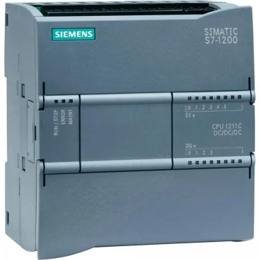
What's sitting on your shelves?
Send us your stock list as Excel or CSV. We'll tell you, free of charge, which items could find a buyer – and which ones you should keep.
- U.S. Department of Energy, Office of Inspector General (2015). Audit report DOE/IG-0936. energy.gov
- Gurtu, A. (2021). Optimization of inventory holding cost due to price, weight, and volume of items. Journal of Risk and Financial Management 14(2).
- International Federation of Robotics (2017). World Robotics – Industrial Robots, chapter 1. ifr.org
- NIST SP 800-82 Rev. 3 (2023). Guide to Operational Technology (OT) Security. nist.gov
- Eurostat, dataset env_waseleeos (waste electrical and electronic equipment). eurostat
- Directive 2008/98/EC on waste, Article 4. eur-lex